
Leavenworth County Civil Docket Searches
Remote access begins with Kansas CaseSearch, which carries Leavenworth County District Court case information. Smart Search asks for a record or case number or a name. Expect registration, sign-in, and a human check. Filters for case type, status, filing dates, and judicial officer narrow the results. The best key is an exact number from court papers. A name search can pull up similar parties.
One channel is not the whole picture. Records missing online can be read at a courthouse terminal. You can also call records at 913-684-0716. Or visit Julie Clemens, Clerk of District Court, at the Leavenworth Justice Center, 601 S. 3rd Street, Suite 3051. Mail and email work too. Give the case number. Name the item you want, and say whether you need a plain or certified copy.
- Open CaseSearch and accept the current terms.
- Enter the exact civil number or party name.
- Use type, status, date, or judge filters.
- Check the county, filing date, and status.
- Ask the clerk for a specific public document.
Leavenworth Civil Search Fields
Kansas instructions display formats like 2019CV25 and RL2019CV25. Leavenworth public notices also use a newer county-year-type-sequence pattern. Copy the text exactly as printed on an order, notice, or receipt rather than guessing at a format from memory. A legacy number can fail after a system change.
| Search control | Best use |
|---|---|
| Number or name | Required main search term |
| Case type | Narrow regular, limited, or other civil results |
| Case status | Separate active and concluded matters |
| File dates | Reduce results for common names |
| Judicial officer | Check a known assignment |
The Kansas interface keeps shifting, so labels may change even as the core number-or-name search stays the same.
Civil Dockets: What They Show
Kansas rules call the chronological list an events index or register of actions. It identifies a case and tracks what happened, though it does not display an image of each pleading or order.
| Case identity | Number, category, filing date, county, status, and assigned judge. |
|---|---|
| Party roles | Plaintiff and defendant, or petitioner and respondent, when public. |
| Filings | Petition, service, answer, motion, response, and other public events. |
| Settings | Conference, motion hearing, trial, continuance, or other setting. |
| Result | Public order, judgment, dismissal, or later enforcement event. |
A brief event label cannot spell out a ruling's full terms. For the public paper behind an entry, the clerk can quote a copy estimate.
Leavenworth Civil Filing Mix
The Kansas Judicial Branch FY2024 civil report shows 2,791 filings in the Leavenworth row. Regular civil accounts for 343 cases. Limited civil comes to 1,561. Domestic relations adds 887. These are fiscal-year workload counts. They say nothing about how any dispute ended and are not a live total.
Regular civil breaks into 84 contract, 108 other, 102 real-property, and 49 tort filings. Limited civil holds 1,520 contract, 40 other, and one real-property filing. That large limited-contract count reflects workload only, not any named party.
What Cases Fill the Civil Docket
Leavenworth County District Court runs several civil tracks. The docket category signals procedure and access differences, but it does not summarize the merits of a claim.
- Regular civil matters, including contract, tort, and real-property disputes.
- Limited civil actions under the applicable Kansas procedure.
- Domestic-relations matters, with remote limits for several types.
- Probate, guardianship, conservatorship, and related proceedings.
- Small claims, which use a simpler petition and hearing process.
Annual statistics cover PFA, PFS, marital-status, and parentage workload categories. The counts themselves disclose no private facts. Court rule withholds some corresponding files from remote access.
Leavenworth Small Claims Path
The county's small-claims instructions allow a typed or handwritten petition so long as it is readable. A self-represented litigant certification must accompany the petition and later filings. The petitioner signs before a notary or a clerk employee. Once filing and payment wrap up, the clerk sets a hearing. The clerk then returns the petition bearing that date.
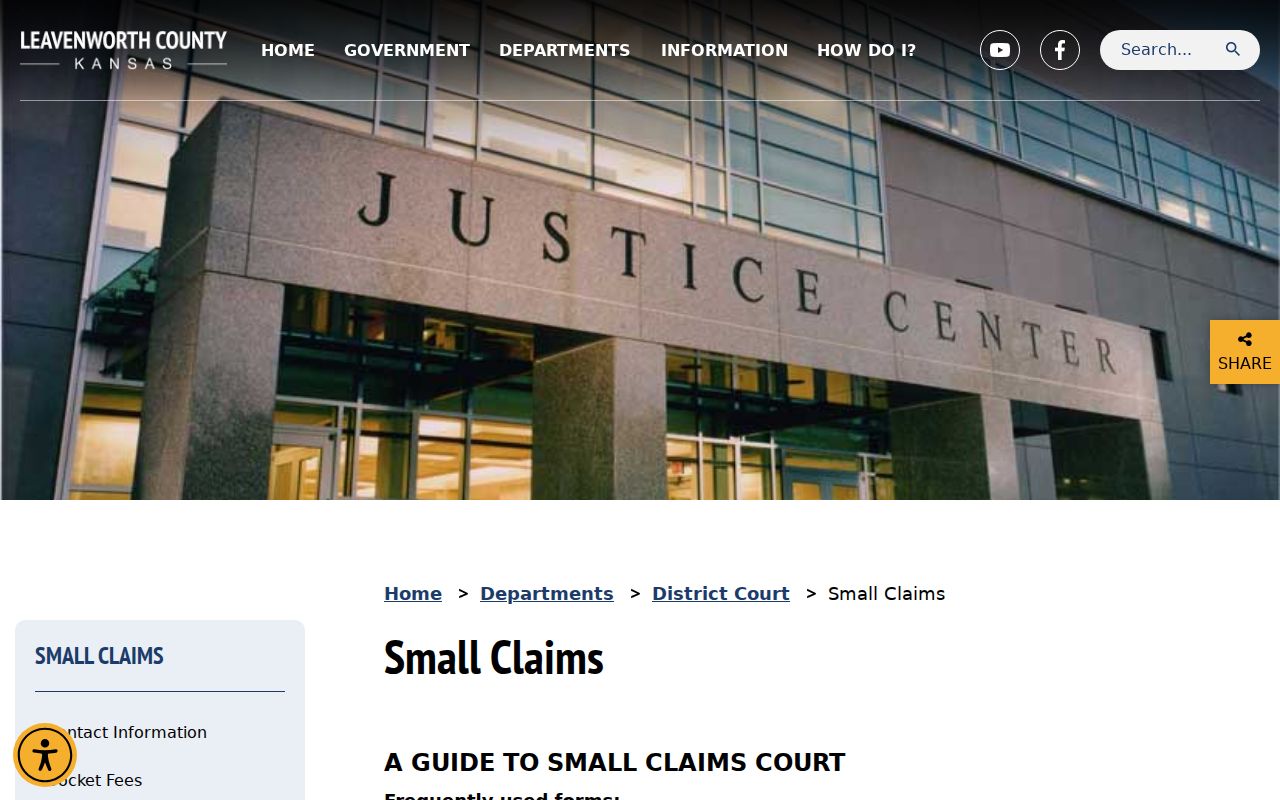
The official page confirms filing is a process, not a docket lookup. Service can bring a separate charge. Two county pages also conflict on the upper claim range tied to the listed $67.50 fee, so confirm the current limit and cost with the clerk.
Hearings on the Civil Docket
A civil setting might be a scheduling conference, motion hearing, pretrial event, trial, or post-judgment proceeding. Read the date together with the type, room, judge, and status. A continuance moves a hearing without ending the case. A scheduling order may govern several deadlines while the events index shows only concise entries.
The court posts no standalone daily or weekly Leavenworth district-court calendar. Attendance matters here. Confirm the next setting in CaseSearch. Then confirm it with the assigned division or clerk. The Leavenworth County court schedule walks through this confirmation chain.
Leavenworth Protection-Order Boundaries
The county's protection-order page points filers to the free Kansas Protection Order Portal. It also documents paper, fax, and in-person paths. That service is a filing route, not a public search for protected people.
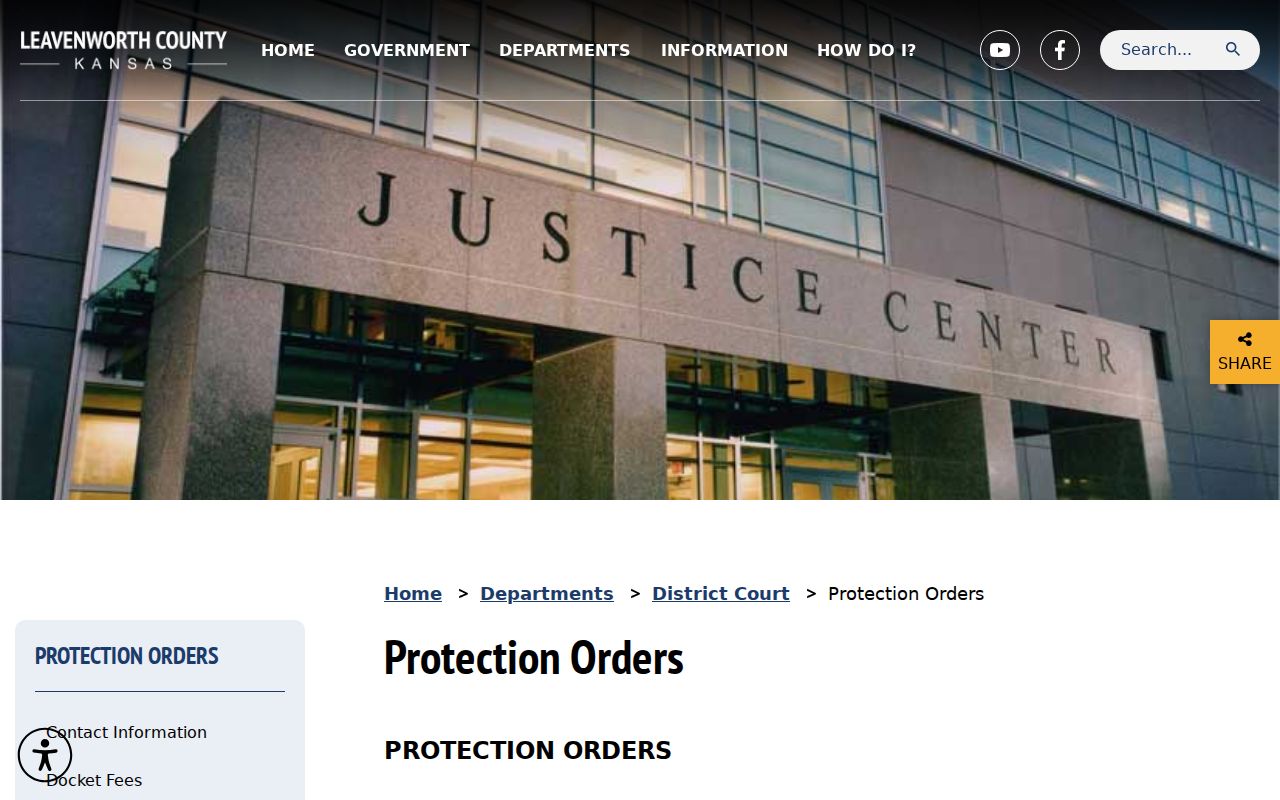
Kansas rules bar remote display for protection from abuse, protection from stalking, divorce, parentage, custody, support, adoption, and related categories. A missing result does not prove no record exists. Ask the clerk about lawful access without publishing protected details.
Who Can See Civil Dockets
Kansas Supreme Court Rules 22 and 106B draw lines between remote case data, courthouse-terminal information, and the official file. Rule 24 makes filing parties responsible for protecting personal data. K.S.A. 45-218 and 45-221 set the public-record framework and its exemptions. A KERA request cannot override a seal, court rule, statute, or case-specific order.
Access has levels. Start with the portal, use the courthouse terminal for broader public case information, and request a specific public copy from the clerk.
The Kansas exemptions statute supports release of separable open material with closed details redacted.
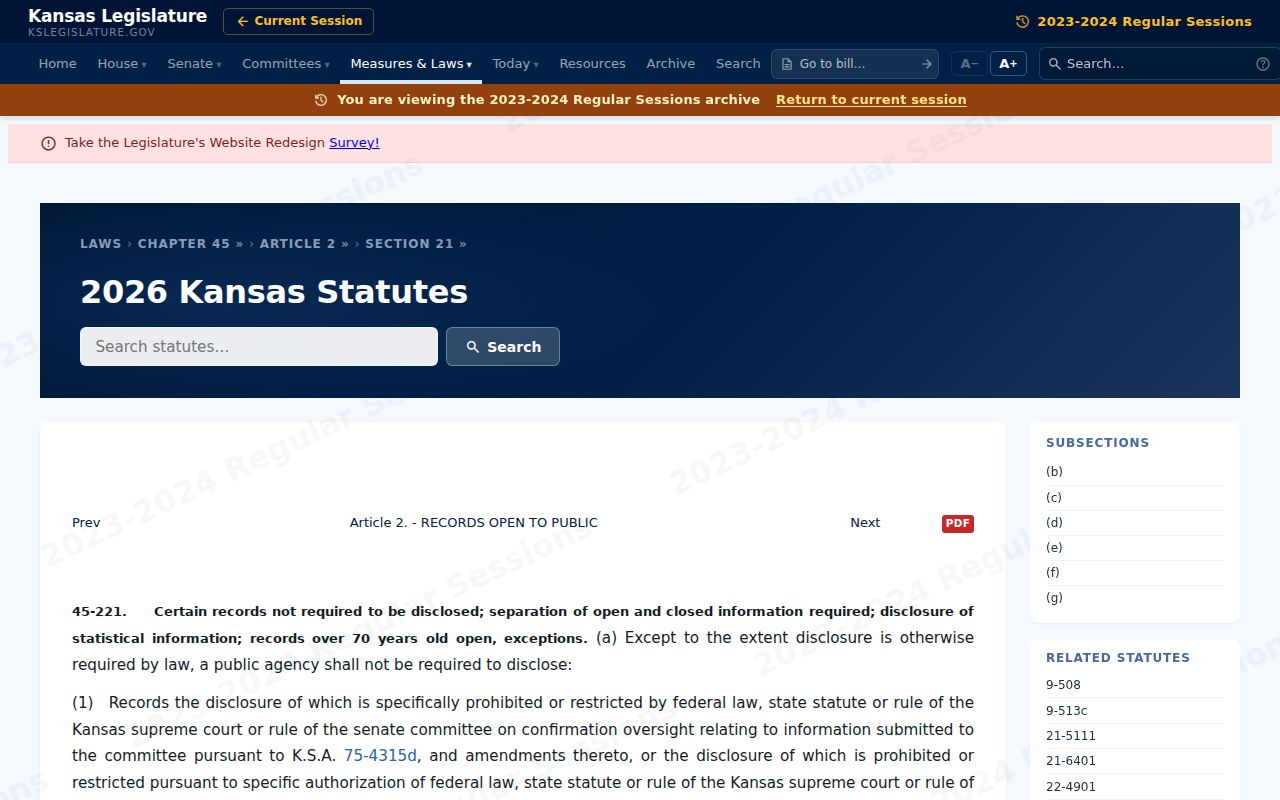
The statute view explains why access is not all-or-nothing. An office may release an open portion while withholding protected content.
Leavenworth Civil Copies and Costs
Copies in Leavenworth County run cheap. The clerk's records page prices most document copies at $0.25 per page. Transcripts run $0.50 per page. Certification adds $1 per document. Research or copying that takes real time is billed at $20 per hour. Ask the clerk for an estimate first. If you mail your request, follow the posted payment instructions and include a self-addressed stamped envelope.
None of these fees cover filing, service, motion, appeal, or judgment amounts. Those are separate charges. When you ask for a civil court record, name the exact pleading, order, or judgment. Say whether you need it certified. A precise request helps the Leavenworth clerk find the right public record and price it correctly.
Leavenworth Civil Filing Routes
Looking and filing are two different jobs. Kansas eFlex handles the filing side for authorized users. That includes attorneys under the state e-filing rule. It takes credentials. It accepts new cases and later documents. But it is not an open civil docket browser. For case information, stay with CaseSearch or go through the courthouse and clerk.
Self-represented filers in Leavenworth County have four working channels. You can use the clerk counter, mail, fax at 913-684-0492, or the after-hours drop box at the Justice Center main entrance. The county self-help page requires a Self-Represented Litigant Certification Form for district-court filings. One caution applies. Dropping paper in the box does not prove you met every filing rule or deadline. So follow the current court instructions. Keep your receipt or confirmation.
Protection orders take their own path through the free Kansas Protection Order Portal, or through the paper, fax, and counter options. Small claims likewise has its own petition, certification, signature, service, and hearing steps. Those steps may generate docket events. The event index itself gives no legal advice on venue, service, time limits, or strategy. Court staff can point you to forms and fees. For anything that needs actual advice, turn to the legal-help resources instead.