
Leavenworth County Criminal Docket Searches
Start remotely. Kansas CaseSearch is where Leavenworth County District Court case information now appears. If you have the exact case number from court papers, use it. A name search also works. Filters cover case type, status, filing date, and judicial officer. Expect a sign-in and a human check. What you get is public case information rather than the complete official file.
When the portal comes up short, go direct. Try the courthouse public-search computer. Call records at 913-684-0716. Or visit Julie Clemens, Clerk of District Court, at the Leavenworth Justice Center, 601 S. 3rd Street, Suite 3051. A focused request can also travel by mail or email. Name the case number and the exact document you need. The terminal or clerk may hold public material the remote system never shows.
- Open Smart Search and accept its terms.
- Enter an exact number or carefully spelled name.
- Apply criminal type and date filters.
- Compare court, year, status, and filing date.
- Ask the clerk for any needed copy.
Leavenworth Criminal Number Formats
Kansas instructions give two looks at the same case. One is the compact 2019CV25; the other is the county-prefixed RL2019CV25. Leavenworth notices also show a newer style that runs county, year, type, then sequence. The letters change with case class. Copy the number straight from official correspondence and do not guess at prefixes or punctuation.
An old number that fails does not mean no case exists. Try the current format, or simply ask the clerk. Name searches can surface look-alike records. Confirm court, year, case type, and filing date before trusting a match.
Criminal Dockets: What They Show
Kansas names the chronological list an events index or register of actions. Every event appears. Yet the index does not promise that each filed paper is viewable online.
| Identity | Case number, type, filing date, county, status, and division. |
|---|---|
| Charges | Public count labels and statutes; a charge remains an allegation. |
| Roles | State, defendant, and counsel roles when public. |
| Settings | Hearings, motions, continuances, plea, and trial dates. |
| Outcome | Orders, dismissal, disposition, sentence, and costs where public. |
A short event label is not the document itself. Ask the clerk for the pleading or order when the exact wording matters.
Leavenworth Criminal Filing Workload
The Kansas Judicial Branch FY2024 table puts 433 felony filings and 278 misdemeanor filings on the Leavenworth row. Pending matters sit at 139 felonies and 60 misdemeanors. Treat these as one fiscal year of workload. They measure neither crime rates nor any live docket total, and they say nothing about a person.
The FY2025 disposition table lists 441 felony and 324 misdemeanor dispositions. Cases closed that year may have opened earlier. Totals never substitute for the events of a named case.
Leavenworth Criminal Results in Context
Annual reports break dispositions into deferred or diversion matters, dismissals, guilty pleas, other resolutions, jury trials, and court trials. In FY2025, the Leavenworth felony row shows 20 deferred or diversion matters, 104 dismissals, 281 guilty pleas, 17 other results, 18 jury trials, and one court trial. The misdemeanor row reports 43 deferred or diversion matters, 133 dismissals, 108 guilty pleas, 32 other results, one jury trial, and seven court trials. Numbers this granular still cannot read a docket for you. A filing count predicts no result. A disposition total may include cases filed in an earlier fiscal year. Each event deserves its own reading.
Status labels need the same caution. Pending does not mean convicted. A dismissal is not an expungement, and a deferred matter has not vanished. Check the latest public order or disposition entry first. Then request that document if its exact terms matter. The Leavenworth County docket search shows how to narrow a statewide result, and the clerk can supply the copy.
Annual-report counts describe court workload only; they do not describe the conduct, history, or likely outcome of any person.
Criminal Case Stages on the Docket
Every Leavenworth County criminal docket opens with a filing. At arraignment the charge and plea are addressed. Pretrial settings handle motions, proof issues, schedules, or negotiations, and a continuance only moves a date; it dismisses nothing. Plea or trial then leads to disposition and sentencing.
Docket flow: Filing › Arraignment › Pretrial › Plea or Trial › Disposition › Sentencing
Diversion opens another route. The County Attorney calls it a written agreement with terms and costs. Nothing about it is automatic. A diversion entry is never a conviction, so read the latest event for the true case status.
Leavenworth Veterans Treatment Docket
The county's Veterans Treatment Court page describes a voluntary treatment model. Sessions are public on first and third Thursdays at 2 p.m. in Courtroom 2. That is a specialty calendar, though, not the full criminal schedule.
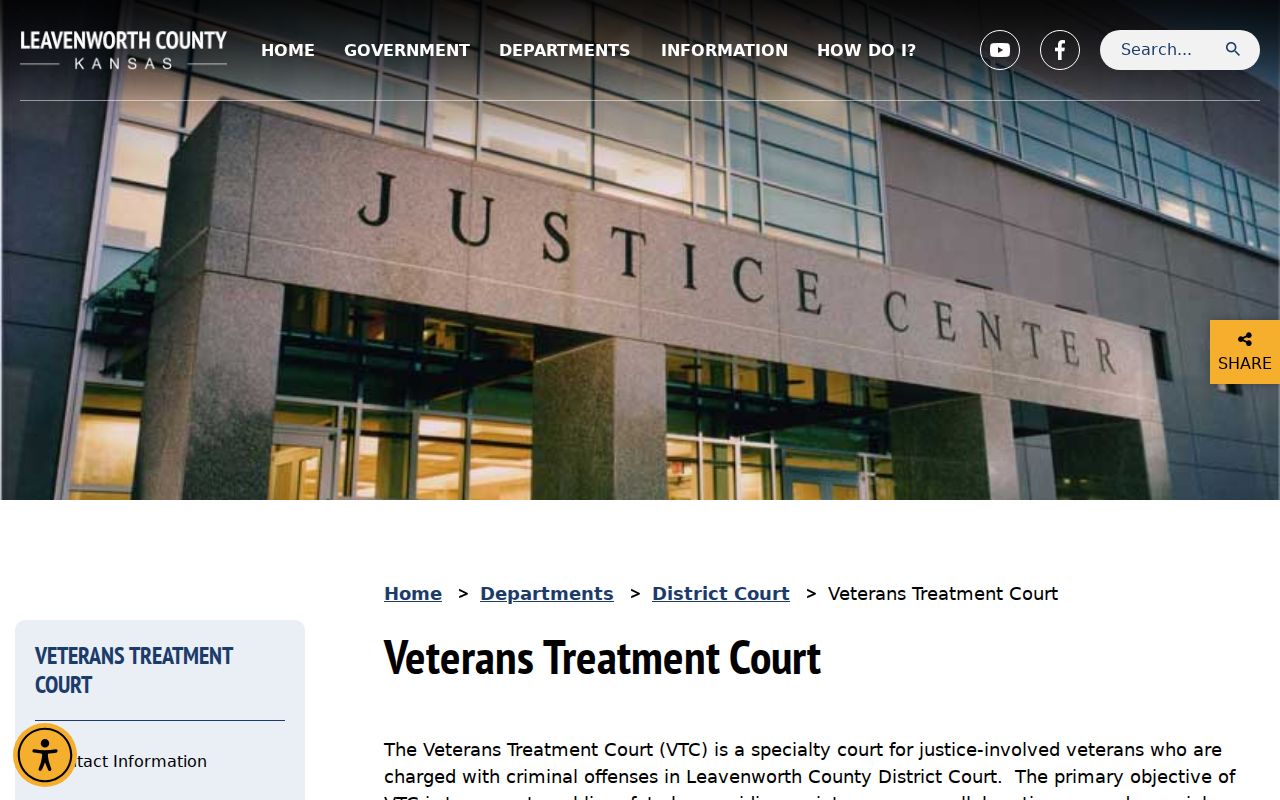
The official page separates public session times from treatment details that may stay private. To confirm one case, use its current event index or assigned division.
Leavenworth County Criminal Docket Courts
Leavenworth County District Court handles felonies and state criminal matters. It belongs to the Kansas First Judicial District. City-ordinance cases, including much city traffic and misdemeanor work, belong to the municipal courts. A city file does not automatically join the district docket.
Read the city on the citation for Leavenworth, Lansing, Basehor, Tonganoxie, or Linwood municipal matters. Federal cases go to the U.S. District Court for the District of Kansas. Search there through PACER or the federal clerk. Kansas CaseSearch never covers them.
eFlex Is Not Docket Search
Kansas eFlex exists for filing, not browsing. Authorized users submit new cases and later filings there, supported by user name, password, recovery, and new-user controls. It is not a public docket browser.
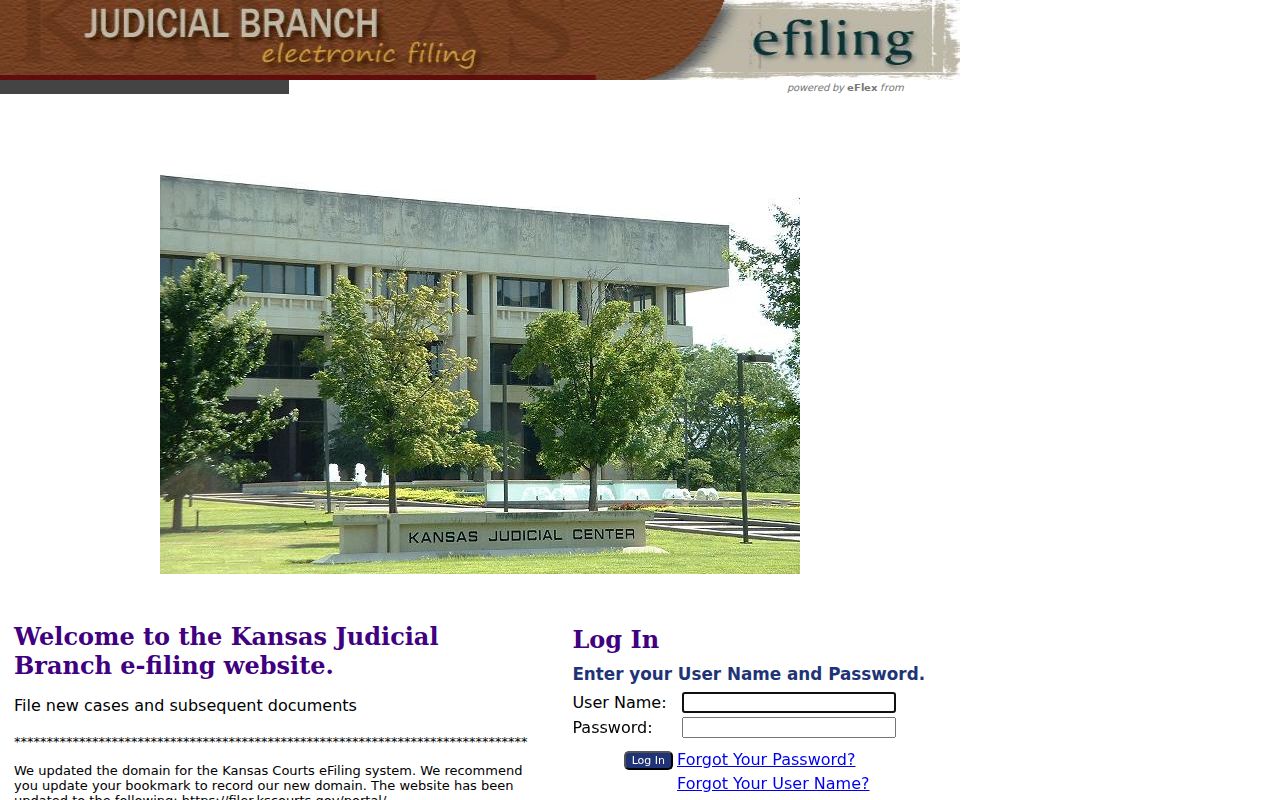
CaseSearch is where the public case information lives. eFlex does something different in the Leavenworth County system: it transmits papers to the court, and a person filing without a lawyer may instead use the counter, mail, fax, or the after-hours drop box.
Access Rules for Criminal Dockets
Access to a Leavenworth County criminal docket runs on a three-tier scheme under Kansas Supreme Court Rules 22 and 106B. Some material is open remotely. Other case information sits only at a courthouse terminal. The official file itself stays with the clerk. Search warrants, grand-jury materials, some prefile matters, juvenile categories, sealed cases, and protected files may be absent or limited no matter where you look. Expungement under K.S.A. 21-6614 can also change what the public may see later on.
Public does not mean unlimited. An empty result may reflect search terms, case type, court-system dates, a seal, expungement, or a remote-access rule.
Two more rules shape what a Leavenworth County case lookup returns. K.S.A. 38-2309 sets distinct rules for juvenile files, Supreme Court Rule 24 requires protected personal data to be redacted, and no records request can override a court order or law that closes material.
Leavenworth Criminal Copies and Fees
Filing a new case costs money, and pulling a copy of an old one costs money, but they are not the same fee. The official docket-fee page lays out those copy costs for the Leavenworth County District Court separately from filing costs.
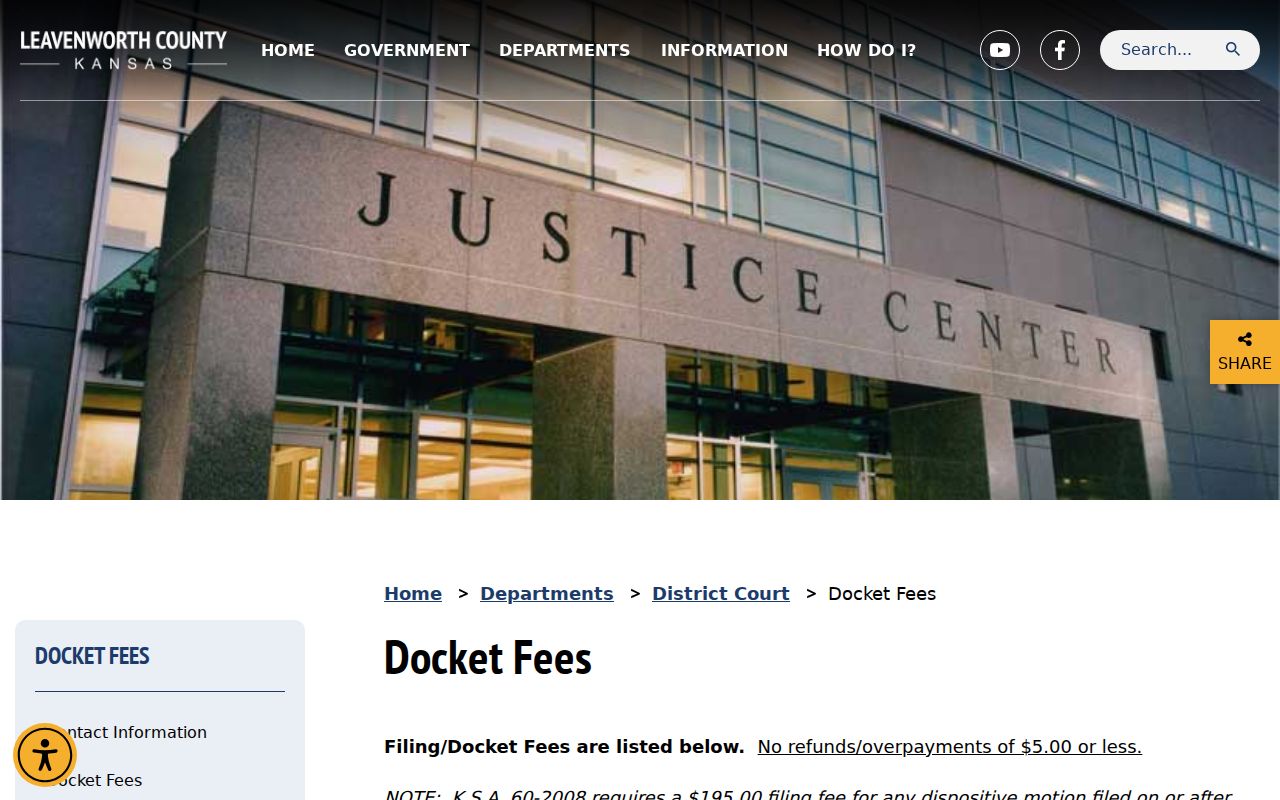
The clerk charges most copies at $0.25 per page. Transcripts run $0.50 per page, certification adds $1 per document, and extensive research or copying is billed at $20 per hour. Ask the clerk for an estimate first, and if you mail a records request, follow the payment and return-envelope directions.
Leavenworth Criminal Document Requests
A docket event and the paper behind it are two different things. The remote events index may show that a motion, order, or sentence entry exists. It may still withhold the document itself. When the exact wording matters, note the event date and document title. Then ask the Leavenworth clerk whether a public copy can be issued. The county records process asks for a case number when you have one. A book and page location also works. It supplies a written or emailed estimate before any copying starts. Mail requests follow the clerk's payment instructions and should include a self-addressed stamped envelope.
Kansas also offers a court-record KORA request form. It asks you to select the court and give contact and delivery details. Describe the existing record with care. You must certify that the information will not be used for a prohibited commercial purpose under K.S.A. 45-230. That form cannot turn closed criminal material into an open record. A seal, an expungement order, a Rule 22 limit, a juvenile statute, or a redaction requirement still applies. That limit controls what the clerk can release. So ask for a named public item. Do not request a newly compiled history or a conclusion about a person.
Keeping the layers straight makes any Leavenworth County court docket search more accurate. CaseSearch helps you locate the criminal matter. The courthouse terminal can expose broader public case information. The clerk keeps the official file and decides what public copy may be issued. No channel substitutes for reading the latest order in context.